
CONTEXT
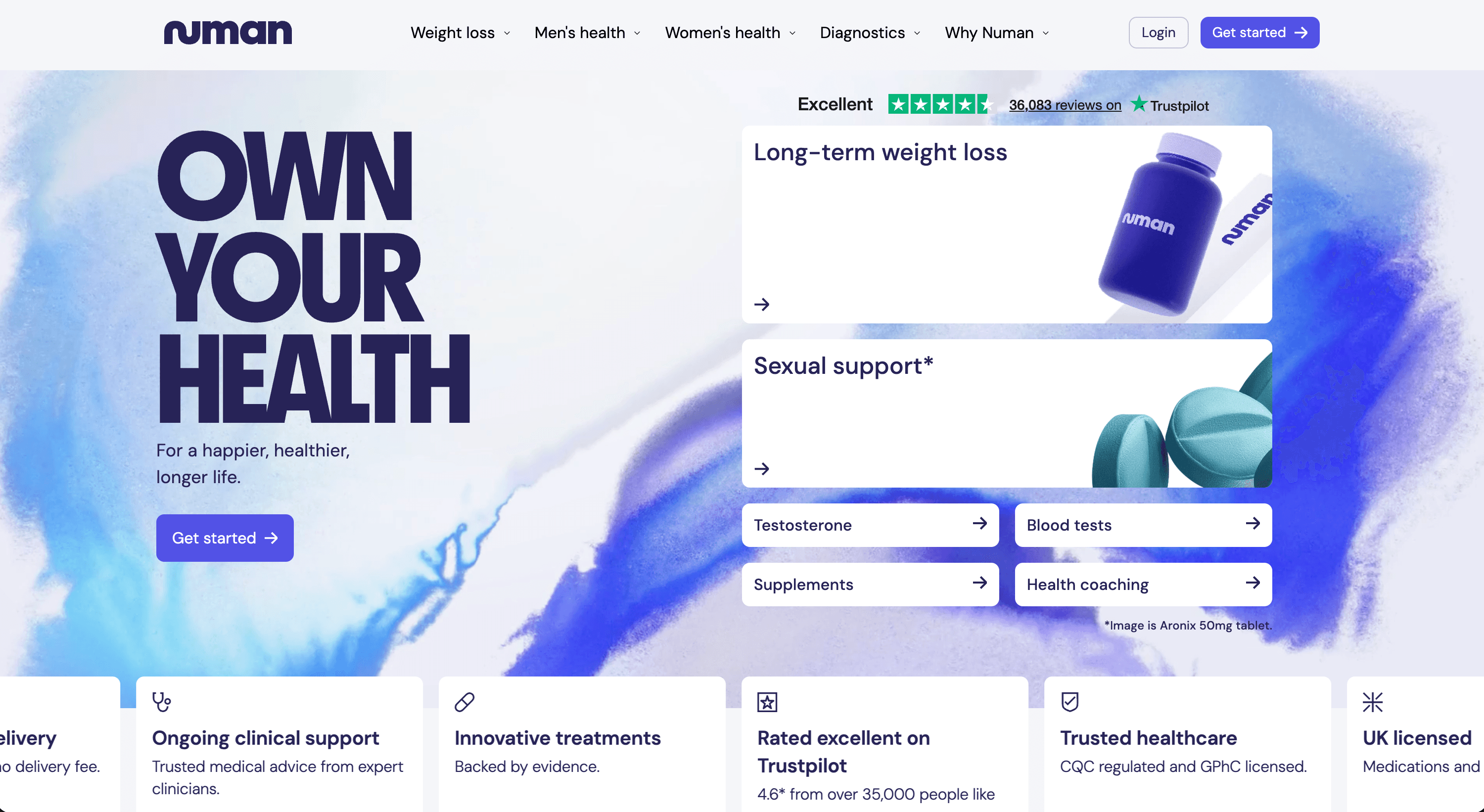
Numan is a UK digital healthcare platform delivering diagnostics-led, personalised care at scale. Behind every patient-facing moment sits a clinical intelligence layer: the rules, structured data and emerging AI that turn a patient’s information into safe, individualised care. My team owns that layer.
THE ROLE
I sit at the intersection of clinical science, product, engineering and regulation: setting clinical direction for the areas I own, designing the clinical pathways our care runs on, and acting as the clinical counterpart to engineering and design. I am the person who defines what “safe” means for a feature, what evidence supports that judgement and whether a decision makes sense clinically, and those decisions rest on data: I analyse it myself before we commit. A large part of the work is making sure our single patient record is appropriate and well structured, so that a personalised experience is possible at all. Every decision leaves a governance trail, so clinical choices remain defensible long after they are made. I also mentor clinical product leads across the organisation.
THE WORK
Diagnostic results, made coherent.
The largest single body of work: rebuilding a fragmented process into a versioned set of clinical procedures for how results are reviewed, triaged by severity, escalated and communicated. Severity tiers with defined actions and response times, end-to-end pathway mapping from sample to follow-up, and benchmarking against national practice, with deliberate divergences documented rather than hidden.
Regulation, answered early.
A reference library capturing how we reason about whether software is a medical device, so the question is not re-litigated each time. Device-classification and clinical-rationale documents written to withstand external regulatory review, pressure-tested with an external consultancy, and regulatory exposure embedded as an early design checkpoint rather than a late surprise.
Incidents, turned into systems.
Acting as clinical decision-maker during live incidents, then running retrospective thematic audits to find root causes and convert findings into registered risks and process changes. Shadowing frontline clinicians to see real workflows, not documented ones.
Data, structured for care.
Leading the move from free text to structured, coded clinical data: interoperability standards and clinical terminologies (FHIR-aligned resources, SNOMED CT, LOINC, dm+d) applied to model patient data, with reusable coding principles so the work outlives any one person, and honest arguments for where coding is not warranted.
Rules and AI, with guardrails.
Clinical product lead for the rules engine deciding what each patient sees, and for the clinical-safety review of AI-generated patient-facing content: designing the guardrails that distinguish what AI may generate from what must be pre-approved.
REFLECTION
Personalisation is easy to promise and hard to make safe. The difference is decided upstream: in how a patient’s record is structured, in pathways designed before the feature is built, and in decisions grounded in data rather than opinion. What this role has taught me is that clinical judgement only scales when it is written down as principles rather than answers, so the next decision can be made without me and defended long after I have moved on.